Cricket Batsman Holding Up Bat Front SVG: What to Check Before You Download, Resize, or Print
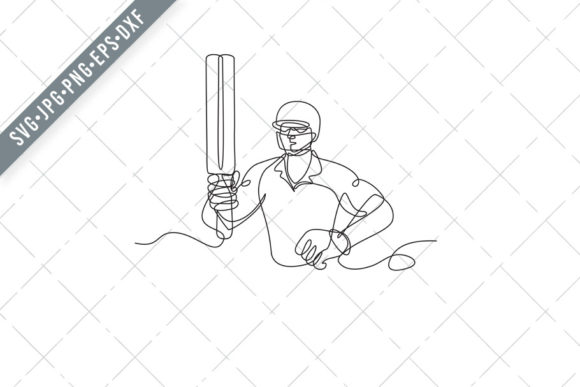
You have found a continuous line drawing of a cricket batsman holding up the bat, viewed from the front. The sketch or doodle style looks clean, and the bundle promises SVG, PNG, DXF, EPS, and JPG files. Many designers, small business owners, and hobbyists jump straight into downloading and using such assets without stopping to check a few things that can later cause frustration. Whether you plan to use this for a birthday invitation, a greeting card, a stencil, or a T-shirt design, a few simple checks can save you time, money, and rework.
What the Cricket Batsman Holding Up Bat Front SVG Actually Offers
This particular SVG is a vector illustration showing a batsman in a front-facing pose with the bat raised. The continuous line style gives it a hand-drawn, sketch-like feel that works well for casual, sporty, or artistic themes. The set includes five file formats:
- SVG — for use with Silhouette Cameo, Cricut, and other cutting machines
- PNG — 300 dpi, at least 10 inches, for print or digital use
- DXF — for CAD-like software and some cutting applications
- EPS — for professional vector editing in Adobe Illustrator or Affinity Designer
- JPG — for quick previews or low-resolution needs
Having multiple file types is genuinely useful. But the presence of all five does not automatically guarantee that every file works well for your specific project. A few common mistakes happen when people assume all SVG files are the same, or that the PNG resolution alone determines print quality.
Mistake 1: Assuming the SVG Works Directly with Your Machine Without Checking Path Complexity
A vector file can look perfectly clean on screen but still cause trouble on a cutting machine. The continuous line style used in this cricket batsman illustration often means long, flowing strokes. That is exactly what gives it the sketch or doodle character. However, if the SVG contains overly complex paths, too many anchor points, or unclosed strokes, your machine may struggle to cut cleanly.
Before you load the file into Cricut Design Space or Silhouette Studio, open it in a free vector viewer or editor (like Inkscape or the preview pane in your file manager) and check a few things:
- Are there any tiny stray anchor points that will cause the blade to make unnecessary tiny cuts?
- Are the strokes set to a uniform thickness, or do they vary in ways that could affect cutting?
- Are there any overlapping lines that will cut twice in the same spot?
If you find issues, use a vector editing tool to simplify the paths or merge overlapping strokes. A small amount of cleanup at the start prevents wasted vinyl, paper, or cardstock later.
Mistake 2: Trusting the PNG Resolution Without Confirming the Actual Dimensions
The description states the PNG is 300 dpi and at least 10 inches. That is good, but many people assume 300 dpi alone guarantees a sharp print. The actual pixel dimensions matter just as much. For example, a 10-inch image at 300 dpi is 3000 pixels wide. That is enough for most home printing projects. But if you plan to use the cricket batsman design on a large banner or a poster, you may need a larger file.
To avoid disappointment:
- Confirm the pixel dimensions of the PNG before you start designing. If the width is less than 3000 pixels at 300 dpi, your printed result may be soft.
- If you need a larger size, use the SVG or EPS to scale up without losing quality. That is the advantage of vector files. Do not enlarge the PNG beyond 120% unless you are willing to accept some blur.
- Test print on plain paper before using expensive materials like photo paper, adhesive vinyl, or transfer paper.
Mistake 3: Overlooking the Stroke Style in the Doodle Effect
The continuous line drawing style is part of the appeal, but it can create problems when you apply it to certain projects. For mugs or apparel, a thin continuous line may not stand out well, especially if you use a light color on a light background. For stencils, very thin or intricate lines may not hold up during cutting or painting.
Before committing to a final design:
- Check the stroke width in the SVG. If it is too thin for your intended application, you can often increase the stroke thickness in vector editing software without distorting the shape.
- For stencil use, consider whether the raised bat creates isolated islands of material that will need bridges or tabs. A vector editor can help you adjust this.
- For T-shirt designs, test the continuous line style at the actual print size. Some lines may become too delicate after scaling down.
Mistake 4: Ignoring Licensing and Usage Rights in the Download
This is one of the most overlooked details among small business owners and freelancers. The product description says the set is for banners, cards, patterns, scrapbooking, party invitations, covers, accessories, birthdays, design, and more. That sounds permissive, but it does not tell you whether you can use the design on merchandise you sell, include it in a logo, or modify it and resell as part of a larger design bundle.
Always look for a license file inside the download folder or on the product page. If you do not see one, contact the seller. Key questions to ask:
- Can you use the design on products you sell (commercial use)?
- Is there a limit on the number of copies you can produce?
- Can you modify the SVG and still use it commercially?
- Do you need to credit the original designer?
Skipping this step can lead to takedown notices or even legal claims if the license is more restrictive than you assumed.
Mistake 5: Using the JPG as a Design Source File
The JPG file is included for quick previewing, not for final production. Yet many beginners open the JPG, place it into their design software, and start building around it. The problem is that JPG compression can introduce artifacts, especially around the continuous lines of the sketch style. These artifacts may not be obvious at first, but they become visible when you zoom in or print at full size.
Better approach:
- Use the PNG for digital projects like social media posts or blog graphics. The 300 dpi version is suitable for most screen use.
- Use the SVG or EPS for any project that requires scaling, cutting, or professional print output.
- If you only have the JPG and need to use it for something beyond a quick mockup, convert the design to a vector using a tracing tool in software like Adobe Illustrator or Inkscape. But be aware that tracing a JPG of a continuous line drawing may produce extra nodes and require cleanup.
What to Check Before You Download or Buy
When you come across a cricket batsman holding up bat front SVG, take a few minutes to evaluate it beyond the preview image. Look for these details:
- File format list — Does it include both SVG and a high-res PNG? That combination covers most common use cases.
- Stroke and fill properties — Is the line weight consistent? Are fills transparent? Continuous line drawings work best when the background is transparent.
- Sample output — Does the seller show examples of the design used on actual products like mugs, shirts, or cards? That helps you gauge how the sketch style looks in real use.
- Customer reviews mentioning cutting or printing — This can reveal whether other users ran into the same issues we discussed.
- File size — A very small SVG file may indicate overly simplified paths that lose detail. A very large one may contain unnecessary complexity.
Practical Advice for Using This SVG in Common Projects
Let us walk through a few realistic scenarios so you can see how the cricket batsman SVG would work in practice.
For a birthday invitation card: Use the PNG (300 dpi) at the size of your intended card layout. Place the batsman centered on the front, and add text around the bat or below the figure. Because the continuous line style is minimal, pair it with a solid background color to make the lines pop. If you print at home, test on plain paper first. If you send to a print shop, ask them if they prefer the PNG or a PDF exported from the SVG.
For a T-shirt design: Open the SVG in a vector editor and adjust the stroke width to at least 2–3 mm to ensure the lines are visible after heat transfer. If you use a white shirt, choose a dark color for the design, and vice versa. Check whether the raised bat creates any very thin areas that may not transfer well. If it does, consider using a simplified version or increasing the stroke width further.
For a stencil: The front-facing batsman with a raised bat can be tricky because the bat may create a disconnected section. You will need to add bridges — small connecting lines that keep the interior parts attached to the outer shape. Use the SVG and add these bridges yourself in a vector editor. Plan where to place them so they do not ruin the sketch effect.
For wall art or a poster: Use the SVG to scale the design to the desired size without losing quality. Combine it with other cricket-related elements like a wicket, a ball, or a cricket ground silhouette. The continuous line style works well in monochrome or with a single accent color.
Why Checking File Compatibility Matters More Than You Think
Downloading a set that includes five file types gives you flexibility only if you actually verify that your software and machine support those formats. For example, some older cutting machine software does not handle the EPS format well, and some free design tools cannot open DXF files without additional plugins. Do not assume that because you have the file, you can open it instantly.
Before starting your project:
- Open the SVG in your design software. If it does not display correctly, try the EPS or DXF.
- If you use a web-based tool like Canva, check whether it supports SVG uploads. Canva does, but it sometimes flattens or rasterizes vector files, especially if they contain complex paths.
- If you need to convert between formats, use a reliable and free converter like Inkscape or an online tool such as Convertio. Always check the output after conversion to confirm the continuous lines remain intact.
Final Thoughts on the Cricket Batsman Holding Up Bat Front SVG
This design style is popular because the front-facing pose with a raised bat is iconic in cricket culture, and the continuous line look adds a modern, artistic touch. The bundle of formats gives you genuine versatility across different projects and platforms. But the convenience only holds up if you apply a little care before you use it.
Take time to inspect the file quality, confirm the licensing, and test the design in your specific workflow. The sketch or doodle style may look simple, but it still requires thoughtful application to look polished on a finished product. A few minutes of checking at the start can turn a good SVG into a great T-shirt, card, banner, or stencil.