Digital Paper Chocolate Brown Background: A Practical Guide for Creative Projects
Creative projects often require a foundation that balances visual impact with versatility. A Digital Paper Chocolate Brown Background offers one such foundation—particularly when it comes in the form of abstract marble patterns rendered in rich, dramatic chocolate brown shades. This article evaluates what these digital backgrounds are, who might benefit from using them, and what practical considerations matter when deciding whether to incorporate them into your work. Rather than present this as a one-size-fits-all solution, the goal here is to help you assess whether this type of design resource aligns with your specific project needs, workflow, and expectations.
What Is a Digital Paper Chocolate Brown Background?
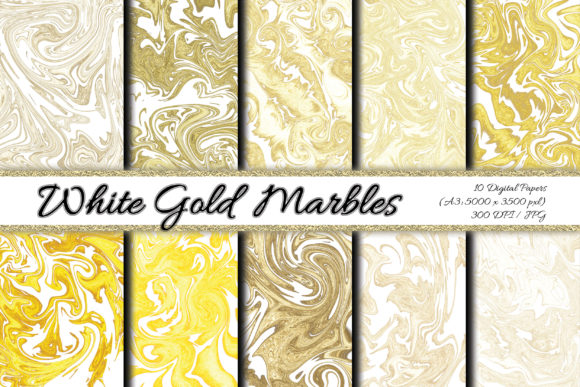
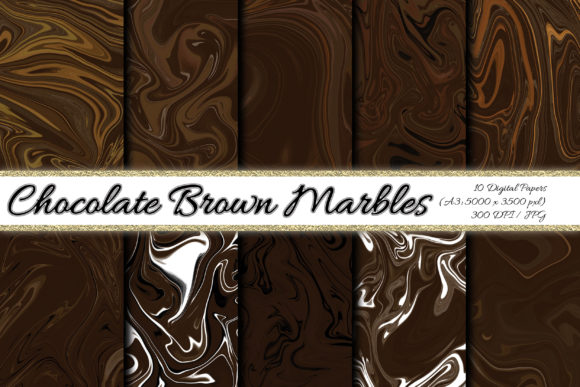
A Digital Paper Chocolate Brown Background is a high-resolution digital file—typically a JPG image—designed to be used as a background or decorative element in various creative and commercial projects. The set in question contains ten abstract marble patterns, each rendered in a range of chocolate brown shades. These are not merely solid colors; they are digitally created or scanned marble textures that mimic the natural veining and organic movement found in stone, but with a consistent brown palette that leans warm, deep, and sophisticated.
The technical specifications matter for practical use. Each file is provided at 300 dpi (dots per inch), which is the standard resolution for professional print work. The dimensions are 16.5 by 11.5 inches, equivalent to 5000 by 3500 pixels. This is roughly A3 size. The folder containing all ten sheets is delivered as a single zip file, making download and organization straightforward. Because the resolution is high, users can crop into a portion of the pattern and still retain enough detail for many applications, including sublimation printing on textiles.
Why Consider This Type of Digital Background?
Interest in a Digital Paper Chocolate Brown Background typically stems from a need for a warm, neutral-yet-rich aesthetic that works across both digital and physical media. Chocolate brown is a color that conveys stability, warmth, and natural elegance. When combined with marble texture, it offers a look that can feel both organic and refined. For someone working on invitations, stationery, or branding materials, this combination can provide a backdrop that is visually interesting without overpowering foreground elements like text or illustrations.
Another reason for interest is practicality. A set of ten different patterns in the same color family means you have variety without requiring multiple sourcing efforts. You can match or contrast sheets across a single project—for example, using a lighter marble pattern for the main background and a darker, more textured one for accents or borders. The consistency in color tone across the set makes it easier to maintain a cohesive visual identity.
For those involved in print-on-demand or handmade crafts, the file specifications add flexibility. The 300 dpi resolution and A3 size allow for printing at a decent scale. The fact that the files are JPGs means they are compatible with virtually any design software—from Adobe Photoshop and Illustrator to Procreate, Canva, or Affinity Designer—without requiring conversion or special handling.
Key Benefits and Tradeoffs
Understanding the benefits of a Digital Paper Chocolate Brown Background helps clarify where it adds value, but it is equally important to consider the limitations.
Benefits
- Versatility across media: Because the files are high-resolution and formatted at 300 dpi, they work for both digital displays (websites, blogs, social media graphics) and print projects (invitations, scrapbooking, gift wrap, card making, labels). You can use them as full backgrounds or as cropped elements for smaller items like tags and stickers.
- Sublimation-ready potential: The resolution is sufficient to extract a portion of the pattern and use it as sublimation art. This opens up applications on apparel, tote bags, pillowcases, scarves, canvas bags, and other polyester-coated or sublimation-friendly textiles. The chocolate brown marble pattern, in particular, works well on items where a natural, earthy look is desired.
- Cohesive aesthetic: All ten sheets share a chocolate brown color family, so mixing and matching them in a single project feels intentional rather than disjointed. This is especially helpful for creating printable sets—for example, a party invitation suite that includes a main invite, a tag, and a gift wrap sheet.
- Immediate usability: The zip file format means you can download and unzip the folder, then drag the JPGs into your project. No additional software or editing is required to start using them as backgrounds.
Tradeoffs and Considerations
- Fixed color palette: The set is limited to chocolate brown shades. If your project requires a broader color range or a different mood entirely—cool tones, pastels, brights—this particular pack will not serve that need. You would either need to combine it with other design elements or look for a different digital paper set.
- JPG compression limitations: While JPG is a widely compatible format, it uses lossy compression. This means that if you repeatedly save and edit the file, you may lose some fine detail. For most background uses, this is negligible, but for projects where the pattern is the main visual element and needs to remain sharp at very close viewing distances, a PNG or TIFF format might be preferable.
- No layered or editable files: These are flat JPG images. If you want to change the color, scale, or orientation of the marble pattern, you will need to do that in your own editing software. The set does not include layered PSDs or vector files. For some users, this is fine—for others who prefer fully customizable resources, it could be a limitation.
- Pattern repetition: Because these are static digital papers, there is no seamless tiling guarantee. If you need a pattern that repeats endlessly across a very large surface—for instance, roll-printed wallpaper or a large fabric run—you may need to manually create a seamless tile or opt for a different type of resource designed specifically for that purpose.
Where a Digital Paper Chocolate Brown Background Excels
This type of digital paper is particularly well-suited for specific scenarios. If your project falls into one of these categories, the Chocolate Brown Marble set is likely a strong fit.
Invitations and stationery: Brown marble backgrounds lend an air of understated sophistication to wedding invitations, bridal shower cards, birthday party invites, and formal event stationery. They pair especially well with gold foil accents, cream or ivory text, and botanical illustrations. The ten-sheet variety allows you to use one pattern for the invitation itself and a complementary one for the envelope liner or reply card.
Scrapbooking and memory keeping: Scrapbookers often look for neutral backgrounds that do not compete with photographs. A chocolate brown marble texture provides a stable, warm base that works well with both colorful and black-and-white photos. It also coordinates with natural-themed embellishments like wood veneer, twine, and dried flowers.
KDP and print-on-demand covers: For those publishing books or creating products through Kindle Direct Publishing, a background like this can serve as a cover or interior page element. The abstract marble pattern is generic enough to avoid copyright concerns, yet visually distinctive enough to give a cover a polished, professional feel.
Digital design backgrounds: Whether you are designing social media graphics, blog post headers, or website wallpaper, the high resolution means the image will look crisp on retina displays. The warm brown tone can soften a layout that might otherwise feel stark or too bright.
Gift wrap and packaging: Printing these patterns on standard A3 or letter-size paper yields gift wrap that feels custom-made. For small businesses, using these backgrounds for product tags, labels, insert cards, or packaging wraps can elevate the unboxing experience.
When Alternatives May Be Worth Considering
While a Digital Paper Chocolate Brown Background works well for many applications, there are situations where you might want to look elsewhere.
When you need a different color family: If your project demands cool grays, blues, or pastels, this set will not fulfill that requirement. A neutral marble pack might be a better starting point if you need flexibility across multiple color schemes. Alternatively, you could look for a marble pattern set that includes multiple colorways in one purchase.
When you require vector scalability: For large-format printing—such as banners, trade show displays, or wall murals—a vector-based pattern (usually an EPS or AI file) scales infinitely without losing resolution. A 5000 by 3500 pixel JPG is sufficient for many projects, but for very large outputs, you may hit a pixel limit that results in visible pixelation.
When you need seamless tiling: If you are creating a repeating pattern for fabric, wallpaper, or wrapping paper rolls, a non-seamless JPG will leave visible seams at the edges when tiled. In that case, you would want a pattern specifically designed to repeat seamlessly, or you would need to edit the file yourself to create a seamless tile.
When you want layered customization: Designers who like to adjust colors, blend multiple textures, or isolate certain parts of the marble pattern may find flat JPG files restrictive. A layered PSD file or a set of high-resolution textures with transparent backgrounds would offer more creative control.
Practical Decision-Making Insights
To determine whether a Digital Paper Chocolate Brown Background set aligns with your goals, ask yourself a few questions.
What is the primary output medium? If your work is predominantly digital—blogs, social media, websites—the resolution and format are more than adequate. If you are printing at large scale, check whether 5000 by 3500 pixels covers your dimensions at your desired print resolution. For example, at 300 dpi, this file prints at 16.5 by 11.5 inches. If you need a 24-by-36-inch poster, you would need to upscale, which may reduce sharpness.
How much color flexibility do you need? If chocolate brown aligns with your brand or project palette, this set is efficient and cohesive. If you foresee needing multiple color variations, consider whether you can achieve that by adjusting the JPG in editing software or whether you would benefit from a wider set.
Are you comfortable with JPG editing? Since these are flat files, any color adjustments, cropping, or compositing will require some familiarity with image editing software. If you are comfortable with that, the set offers good value. If you prefer drag-and-drop usability with no editing, the files still work as-is for backgrounds.
What variety do you actually need? Ten patterns in the same color family provide a good amount of variation without overwhelming your choices. If you typically use only one or two background patterns per project, this set gives you room to rotate without buying multiple packs. If you prefer a larger library of patterns, you may want to look for a bundle that includes more sheets or multiple color palettes.
Assessing Alignment With Your Goals
Ultimately, a Digital Paper Chocolate Brown Background set is a practical resource for anyone who regularly needs warm, neutral, textured backgrounds for print or digital work. The chocolate brown marble aesthetic is specific enough to give a project character, yet versatile enough to pair with a wide range of other design elements. The high resolution and standard file format make it immediately usable, and the ten-sheet count offers meaningful variety without excess.
Where the set adds the most value is in projects that benefit from a cohesive, earthy elegance—invitations, stationery, scrapbooking, packaging, and digital backgrounds. It becomes less ideal when you need extreme scalability, full color customization, or seamless tiling at large production volumes. In those cases, a vector-based or multi-color alternative would serve you better.
By weighing the benefits against the tradeoffs, and by matching the resource to the specific demands of your project, you can decide whether this type of digital paper is the right choice for your creative work. For many users who regularly design within a warm, neutral palette, it is a reliable and time-saving option that delivers consistent visual results across a range of applications.