Halloween Candy Corn: A Versatile Design Asset Beyond the Seasonal Treat
When most people hear “Halloween Candy Corn,” they think of the polarizing striped confection that sparks strong opinions every October. But for designers, educators, and content creators, Halloween Candy Corn also refers to a high-resolution illustration asset that can serve far more purposes than seasonal decoration. This particular vector and raster file set offers a clean, scalable depiction of the iconic candy, delivered in multiple professional formats at 300 dpi. Whether you are building a branding kit for a fall-themed product, creating classroom worksheets, or assembling a pattern library, this illustration earns a closer look for its practical flexibility and consistent output quality.
In this evaluation, we will examine the characteristics, real-world performance, and audience fit of this Halloween Candy Corn illustration resource. The goal is to give you a clear, balanced understanding of what it offers and where it works best—without the sales fluff or exaggerated claims that often accompany asset reviews online.
What the Halloween Candy Corn Illustration Actually Delivers
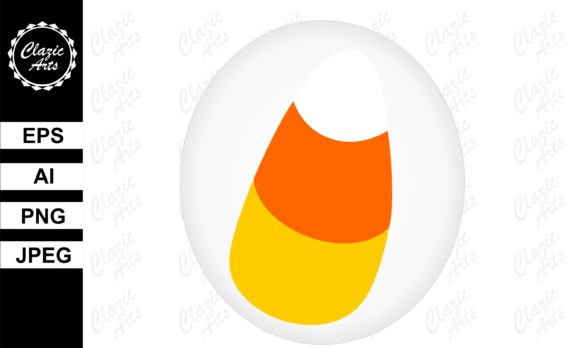
The asset is a digital illustration of a classic candy corn piece, rendered at 300 dpi resolution. It comes packaged in four file formats: EPS, AI, JPEG, and PNG. High-resolution raster files combined with editable vector formats mean the illustration can be used for both screen-based projects and print applications without quality loss. The 300 dpi baseline ensures that printed versions stay sharp at typical small-to-medium sizes, while the vector formats allow scaling to virtually any dimension without pixelation.
Because it is an illustration rather than a photograph, the asset offers a clean, stylized representation of candy corn. This makes it suitable for contexts where a realistic image might feel too busy or photographically inconsistent—think coloring book pages, simple icons, or repeating patterns. The illustration style is straightforward and recognizable, which is exactly what many projects require for quick visual communication.
Format Breakdown: What Each File Brings to Your Workflow
Understanding the strengths of each format helps you decide how to integrate Halloween Candy Corn into your existing tools and pipelines.
- EPS (Encapsulated PostScript): A vector format widely supported across design software, including Adobe Illustrator, CorelDRAW, and Affinity Designer. It preserves scalability and editability, meaning you can adjust colors, resize without limits, and extract elements for further customization. EPS files are especially useful for print houses and professional workflow environments where legacy compatibility matters.
- AI (Adobe Illustrator): The native Illustrator format gives you direct access to original layers, paths, and swatches. If you work primarily in Illustrator, this is the most convenient option for making precise adjustments—such as recoloring the orange, yellow, and white bands to match a brand palette.
- JPEG: A compressed raster format suitable for quick mockups, digital presentations, or website thumbnails. The 300 dpi JPEG is fine for low-print usage and social media graphics where file size matters more than absolute editability. Note that JPEG uses lossy compression, so repeated saves may degrade quality.
- PNG: A lossless raster format with transparency support. This is ideal for overlaying the candy corn on different backgrounds in worksheets, web design, or slide decks. The transparent background eliminates the need for manual masking in many common applications.
Kids’ Coloring Books and Activity Pages
One of the most common uses for a clean line-art-style illustration like this is in children’s activity materials. The recognizable candy corn shape works well as a simple coloring subject for young children. At 300 dpi, the outline prints crisply even on standard office or home printers. The vector formats allow you to adjust the stroke weight or remove color fills entirely if you want a pure outline version for coloring. Educators and self-publishers building seasonal activity books will find this asset ready to drop into a page layout with minimal prep.
Patterns and Textile Design
For creators developing repeating patterns—whether for fabric, wrapping paper, or digital backgrounds—the candy corn illustration can be tiled as a motif. The EPS and AI formats make it straightforward to rotate, scale, or recolor the element to fit different grid systems. The clean vector geometry means you can create seamless patterns without worrying about resolution breakpoints. Pattern designers working on fall or Halloween collections will appreciate having a single asset they can reuse across multiple layouts with consistent rendering.
Iconography and Logo Concepts
Because the asset is a simplified illustration, it works well as an icon in user interfaces, event branding, or navigation elements. A candy corn icon on a “Halloween specials” button for an e-commerce store, for example, communicates the theme instantly. While this specific asset may not be refined enough for a primary corporate logo (it is a generic candy shape), it can serve as a placeholder or supporting graphic in thematic branding for small seasonal campaigns. The vector formats give you the freedom to simplify the shape further if needed.
Worksheets and Classroom Materials
Teachers and homeschool educators frequently need themed visuals for math worksheets, reading prompts, or reward stickers. The PNG with transparency allows you to drop the candy corn into a worksheet file without extra editing. The high dpi ensures that printed handouts look clean, not fuzzy. Because the illustration is neutral in tone and not tied to a specific brand, it fits into a wide variety of educational contexts without distraction.
Quality and Consistency Across Use Cases
The 300 dpi resolution is a meaningful differentiator. Many free or low-cost illustration assets hover around 72 or 150 dpi, which limits their suitability for print. At 300 dpi, this Halloween Candy Corn asset meets the baseline standard for most print projects: flyers, booklets, posters, and packaging mockups. When combined with vector formats, you effectively get a file that can output at higher effective resolutions for larger formats.
Consistency is another practical strength. Because the asset is delivered in multiple formats from a single source, you can be confident that the JPEG version matches the EPS version in color and proportion. This is not always the case with bundled assets from different creators. For workflow reliability, having a single source of truth across formats reduces rework and color-matching headaches.
Possible Limitations to Keep in Mind
- Limited subject matter: This is a single candy corn illustration. If you need a full set of Halloween treats or varied poses and angles, you will need to acquire additional assets. One illustration cannot realistically cover a complete seasonal design system.
- Stylistic fit: The illustration style is clean and generic, which is a strength for broad compatibility, but it may not match brands that prefer hand-drawn, textured, or hyper-realistic aesthetics. Evaluate whether the simplicity complements your existing visual language.
- Color range: The traditional candy corn palette (orange, yellow, white) is fixed in the base illustration. While vector formats allow recoloring, users who only work with raster files (JPEG/PNG) may find it harder to adjust hues without quality loss.
Who Benefits Most From This Resource
Based on its format availability, resolution, and style, the Halloween Candy Corn illustration is best suited for:
- Freelance designers and illustrators who need a quick, clean seasonal element to incorporate into client projects without building it from scratch.
- Self-publishing authors and educators creating Halloween-themed workbooks, coloring books, or classroom aids on tight timelines.
- Small business owners running seasonal promotions and needing simple, printable graphics for signage, social media, or product packaging.
- Bloggers and content creators who produce Halloween-related digital content and want a flexible visual asset that works across posts, printables, and email headers.
- Marketers building pattern libraries or themed web elements who value consistency across touchpoints.
Practical Recommendations for Getting Value From This Asset
To make the most of the Halloween Candy Corn illustration, start by opening the AI or EPS file and evaluating the artwork at scale. If you plan to use it in print, test a small proof at the intended size to confirm that the stroke weight and detail level match your expectations. For digital use, the PNG with transparency will save time during layout. Keep the vector file as your master version even if you export raster copies for quick use—this preserves your ability to adapt the asset later.
Consider building a small library of complementary illustrations in a similar style so that the candy corn does not feel isolated in your designs. Pairing it with pumpkins, leaves, or simple geometric shapes can create a cohesive seasonal system without requiring additional purchasing each time. If your work frequently involves Halloween themes, treating this asset as a foundational motif rather than a one-off element will maximize its long-term value.
Final Observations on the Halloween Candy Corn Illustration
This is a straightforward, well-prepared asset that does exactly what it promises: it gives you a high-resolution, multi-format illustration of candy corn suitable for a wide range of professional applications. It is not a flashy or overly complex resource, and that is precisely the point. Many creators and business owners need reliable, neutral assets that can be dropped into workflows without friction. The Halloween Candy Corn illustration fulfills that need with consistent quality across formats and enough flexibility to adapt to different project types.
If your work involves seasonal design, educational materials, or thematic branding, this asset offers a practical starting point. Evaluate it against your specific content needs and existing visual style. For many professionals, it will serve as a useful addition to a design library—one that saves time and delivers clean results when Halloween projects come around.