Diamond Borders Texture Paper: A Strategic Tool for Creative and Commercial Projects
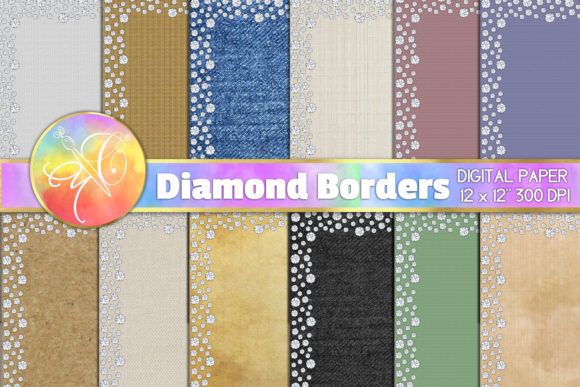
When you work with digital assets day after day, you learn to distinguish between decorative filler and materials that actually advance a project. Diamond Borders Texture Paper belongs to the latter category. These 12 high-resolution digital papers, each 12 by 12 inches at 300 DPI, offer more than visual appeal. They provide a foundation for intentional design work across print and digital media. Whether you are producing invitations, building a scrapbook, designing marketing materials, or assembling client presentations, the quality of your background textures can significantly influence how your final output is received.
At first glance, a set of digital papers may seem like a minor detail in a larger workflow. But the choice of texture and border elements often determines whether a project feels polished or unfinished, professional or amateurish. Diamond Borders Texture Paper delivers a consistent, high-resolution base that supports both creative experimentation and professional-grade production. The fact that you receive an instant download of 12 separate backgrounds means you can begin working immediately, without delays or complicated licensing restrictions. You are free to print as many copies as you need, for personal or commercial use, which opens up a wide range of strategic applications.
Why Texture Paper Matters for Strategic Decision-Making
Every project you undertake involves a series of decisions, and the materials you choose are part of that chain. Selecting Diamond Borders Texture Paper is not simply about picking a pretty pattern. It is about setting a visual tone that aligns with your goals. If you are a small business owner preparing promotional materials, the texture and borders you use communicate something about your brand's attention to detail. If you are a teacher creating classroom resources, the same backgrounds can make learning materials more engaging without distracting from content. If you are a hobbyist scrapbooker, the consistency of a 300 DPI file ensures that your printed pages look crisp and intentional rather than pixelated or rushed.
The strategic value of these digital papers lies in their versatility. Because they are delivered as individual 12x12 inch files at high resolution, you can adapt them to multiple outputs: card making, party invitations, event flyers, digital planners, social media graphics, or printed wall art. This flexibility means that a single purchase can serve many purposes over time, reducing the need to source new backgrounds for every project. For entrepreneurs and freelancers who manage tight budgets and timelines, that kind of reusable asset is genuinely useful.
Matching the Right Paper to Your Project Goals
Before you open an editor and start dragging files onto a canvas, it helps to clarify what you want the background to accomplish. Diamond Borders Texture Paper is not a one-size-fits-all solution, but it covers a broad spectrum of aesthetic needs. The diamond border pattern offers structure without overwhelming the foreground content. That makes it particularly effective for projects where you need a defined edge or frame, such as certificates, formal invitations, or product labels. The texture element adds depth, so the final piece does not look flat or generic.
Think about the message you want to convey. Are you designing an invitation for a wedding or a milestone birthday? The diamond motif can suggest elegance and precision. Are you creating a promotional flyer for a boutique service? The texture adds a tactile quality that suggests craftsmanship. Are you assembling a portfolio or presentation? A subtle textured border can elevate the perceived value of your work without distracting from the content itself. The key is to match the paper's visual characteristics to the emotional or professional tone you need to strike.
For educators and trainers, these backgrounds can be used to create worksheets, flashcards, or activity sheets that feel more finished and engaging. For bloggers and content creators, they serve as attractive backdrops for quote graphics, title slides, or social media posts. The 300 DPI resolution ensures that whatever you produce, whether printed at home or sent to a professional print center, will maintain its clarity and impact.
Beyond Decoration: How Texture Paper Supports Branding and Communication
One of the less obvious uses of Diamond Borders Texture Paper is in branding work. Small business owners and marketers often struggle to create cohesive visual materials without hiring a designer. Having a set of consistent, high-quality backgrounds allows you to maintain a uniform look across different pieces: business cards, thank-you notes, product tags, and social media headers. The diamond border pattern becomes a subtle signature element that ties your materials together.
This is not about replacing professional design. It is about giving yourself a reliable starting point. When you have a texture paper that works well with your color palette and typography, you reduce the number of variables you need to manage. That simplicity leads to better consistency and fewer design mistakes. For freelancers and small teams, that operational efficiency matters. You spend less time searching for assets and more time communicating your message.
The same principle applies to customer experience. If you run an online shop and include a printed thank-you card or a branded insert in your packaging, the quality of that insert reflects on your business. Using a textured, well-designed background tells your customer that you care about details. It is a small gesture, but it contributes to the overall impression of your brand.
Planning Your Projects with Intention
To get the most out of Diamond Borders Texture Paper, approach each project with a clear plan. Start by identifying the output format. Will you be printing at home on an inkjet or laser printer? Ordinary white cardstock or photo paper works well. If you need higher quality, a local copy center such as Office Depot, Office Max, Costco, or Staples can handle professional printing with a wider range of paper options. Knowing your output method in advance helps you decide whether to use the files as-is or to adjust them slightly for your printer's characteristics.
Next, consider the editing environment. These digital papers work with any editor program, so you are not locked into a specific software suite. Whether you use Adobe Photoshop, Canva, Affinity, or a free alternative, the files load easily and maintain their resolution. Because they are 12x12 inches at 300 DPI, you also have room to crop or resize them for smaller formats like A4, letter, or square layouts without losing quality.
Another planning consideration is quantity. Since you can print as many copies as you want, there is no need to ration the files. However, think about how you will organize them. Naming each background clearly and keeping them in a dedicated folder will save time when you revisit the set for future projects. A small investment in file management upfront pays off when you need to find a specific pattern quickly.
Practical Considerations Before You Print
Even with high-quality files, the final output depends on your printing setup. If you are using a home printer, make sure your settings match the paper type you are using. For glossy photo paper, select a photo print setting. For matte cardstock, adjust accordingly. Running a test print on plain paper first can help you catch color shifts or alignment issues before you use your premium stock.
If you decide to use a local print center, bring the digital files on a USB drive or upload them directly. The staff at Office Depot, Office Max, Costco, or Staples can advise on the best paper weight and finish for your project. For invitations or cards, a heavier cardstock with a subtle sheen often works well with textured patterns. For scrapbook pages or wall art, a matte finish may reduce glare and make the diamond borders appear more natural.
One strategic observation: if you are using these digital papers for a time-sensitive project such as an event invitation, give yourself enough lead time to handle reprints if needed. Printing always carries a small risk of errors, and having a buffer day ensures you are not scrambling at the last moment.
The Role of Digital Paper in Long-Term Creative Operations
For professionals who produce content regularly, building a library of reliable assets is a smart operational move. Diamond Borders Texture Paper can become part of that library. Because the set includes 12 distinct backgrounds, you have enough variety to avoid visual repetition across multiple projects, while still maintaining a cohesive stylistic thread. Over time, you will develop a sense of which background works best for which context. That familiarity speeds up your workflow and reduces decision fatigue.
For educators and trainers who create handouts, worksheets, or visual aids repeatedly, having a go-to set of backgrounds improves productivity. Instead of designing from scratch each time, you drop in a textured diamond border paper, add your content, and produce a finished piece in minutes. The same efficiency applies to event planners, card makers, and small business owners who produce seasonal promotions or recurring communications.
There is also a long-term benefit in terms of brand recognition. If you consistently use a particular style of border or texture across your materials, your audience begins to associate that look with your work. Over months and years, that visual consistency builds trust and recognition. It is a subtle form of marketing that costs nothing extra to implement.
Avoiding Common Pitfalls When Using Digital Backgrounds
Even with excellent materials, results can fall short if the approach lacks intention. One common mistake is using a busy or high-contrast background that competes with the foreground text or images. Diamond Borders Texture Paper is designed with structure and subtlety, but it is still important to test how the pattern interacts with your content. If you are adding text, make sure there is enough contrast for readability. If you are adding images, check that the texture does not distract from the subject.
Another risk is overusing the same background across too many projects without variation. While the 12 papers provide some diversity, you should still rotate them thoughtfully. Repetition can make your work feel stale, even if the pattern itself is attractive. A good practice is to assign specific backgrounds to specific types of projects, such as one pattern for formal invitations and another for casual communications.
Finally, avoid treating digital paper as a shortcut that replaces thoughtful layout and typography. The background is a supporting element, not the main attraction. Your content, message, and overall design still need to be well-considered. The texture paper enhances what you build, but it cannot salvage poor composition or unclear communication. Use it as a tool to amplify your intent, not as a substitute for it.
When you approach Diamond Borders Texture Paper with clear goals, practical planning, and an eye for long-term consistency, it becomes a genuinely valuable asset. It saves time, reduces design friction, and elevates the quality of both digital and printed projects. Whether you are producing one invitation or a hundred marketing pieces, the combination of high resolution, instant access, and versatile application makes this set a practical addition to any creator's toolkit.